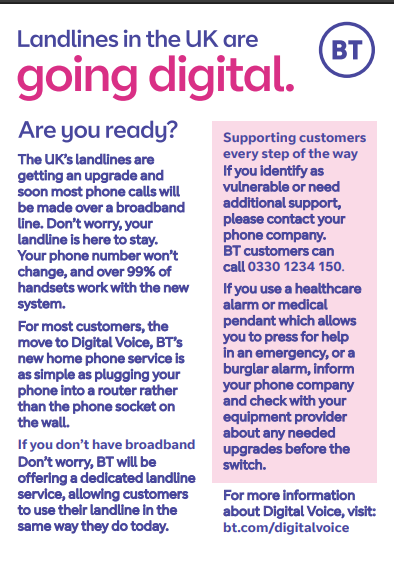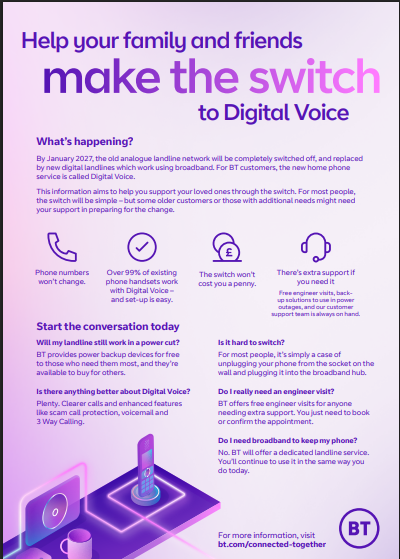

The UK’s analogue copper landline network is being replaced with a digital service ahead of the nationwide switchover, which is due to be completed by January 2027. More than three million UK households have already made the switch.
You do not need to take any action until your phone provider contacts you. However, it is important to respond when they do. BT research found that almost one in three people have ignored messages from a service provider, while three in ten have missed an important deadline, often resulting in avoidable disruption or additional costs.
For most customers, the change is straightforward and simply involves connecting your phone to your broadband router instead of the wall socket. If you don’t have broadband, your provider will explain the options available to ensure you can continue using your landline.
The switch is free, you’ll keep your existing phone number, and more than 99% of existing handsets are compatible. Customers will receive at least four weeks’ notice before their switch date.
The move to digital also brings additional benefits, including improved protection against scam and nuisance calls. BT reports that its Call Protect service blocked more than 91 million scam and spam calls in the last year.
Extra support is available for customers who need it, including free engineer visits and backup solutions for eligible customers who rely on their landline during power cuts.
If you’re contacted by your provider about the digital switchover, make sure you respond promptly and follow the guidance provided. If you know someone who may be less confident with technology, you may also wish to let them know about the upcoming change.
The CSPA recognises that the move from the ageing analogue landline network to a modern digital service is a necessary and important upgrade that will help ensure reliable, secure and sustainable communications for the future. We encourage customers to engage with their provider when contacted and to take the simple steps required to complete the switch.
However, it is equally important that no one is left behind during this transition. Particular care must be taken to support older people, those with disabilities, and other potentially vulnerable customers who may rely heavily on their landline service or require additional assistance to make the change. Providers must ensure clear communication, accessible support, and appropriate safeguards are in place so that every customer remains connected to the people, services and emergency support they depend upon, with no loss of connectivity as the switchover progresses.